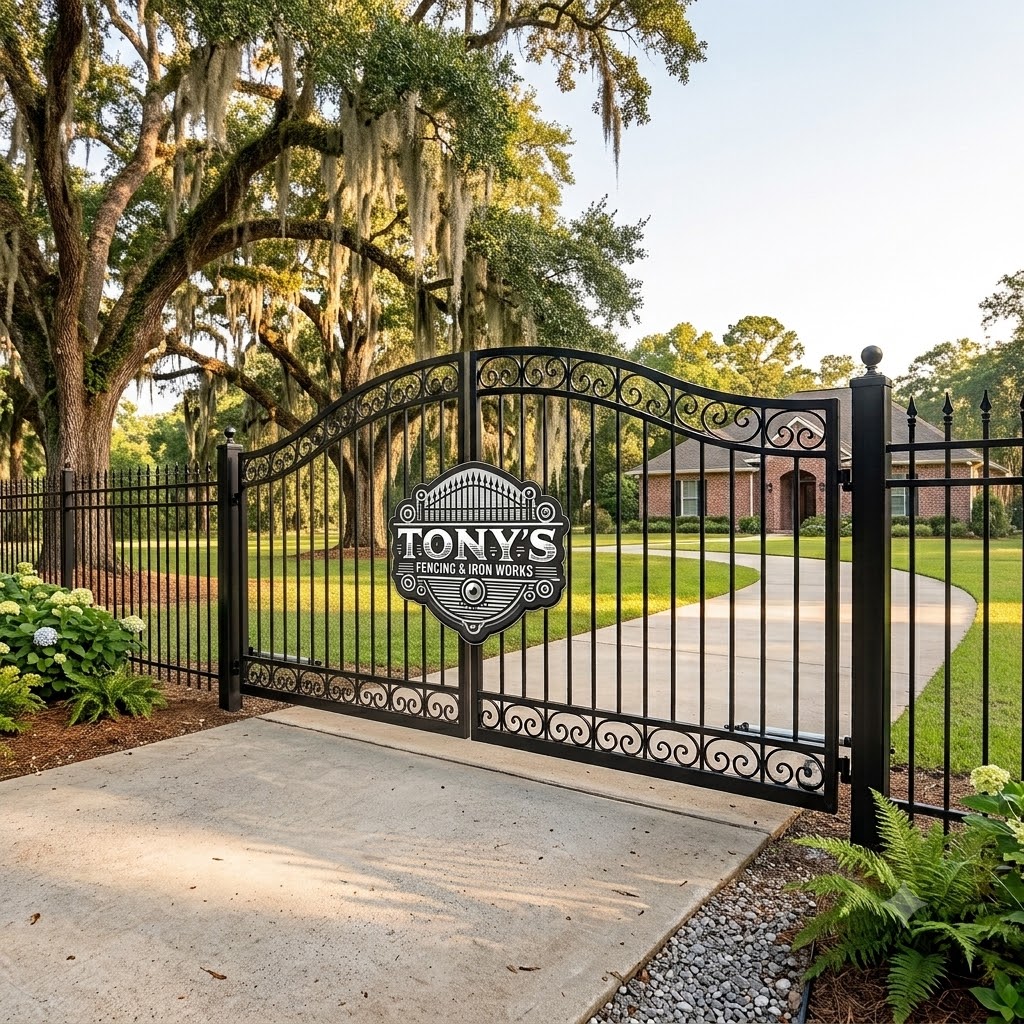
Tony’s Fencing & Iron Works shares practical fence gate planning tips for Southeast Louisiana homeowners, including access, drainage, hardware, and maintenance.
ABITA SPRINGS, LA, UNITED STATES, July 6, 2026 /EINPresswire.com/ — Local contractor outlines access, drainage, hardware, and maintenance factors that can help homeowners avoid common gate problems.
A fence gate is often treated as a small detail in a larger fencing project. However, its location, width, swing direction, hardware, and support posts can affect how well a property functions for years. Tony’s Fencing & Iron Works is sharing practical fence gate planning information for homeowners across Covington, Mandeville, Madisonville, Slidell, Hammond, Ponchatoula, and surrounding Southeast Louisiana communities.
A gate may need to do much more than provide a path into a backyard. Depending on the property, it may need to accommodate lawn equipment, pets, trash carts, pool service crews, landscaping equipment, trailers, vehicles, or future projects such as sheds, patios, drainage work, and outdoor kitchens.
For that reason, homeowners are encouraged to think beyond the appearance of the gate before construction begins. Planning the correct access point early can help avoid costly modifications after the rest of the fence is installed.
“Homeowners often know they need a fence, but they may not think through exactly how they will use the gate every day,” said Tony Ostrowski of Tony’s Fencing & Iron Works. “A little planning at the beginning can make a big difference when it comes to convenience, drainage, security, and long-term performance.”
Choosing the Right Gate Width
Gate width should match the way the property is used. A standard walk gate is commonly sufficient for people, pets, and trash cans. However, larger openings may be necessary for equipment or vehicle access.
A typical walk gate is often around three to four feet wide. A wider single gate may be useful for lawn mowers, wheelbarrows, and garden equipment. Double gates can provide broader access for trailers, work vehicles, sheds, pool construction, or major landscaping projects.
Homeowners should consider not only what they need today, but also what future projects may require. A wider gate can prevent the need to remove fence panels later when access is needed for a contractor, equipment delivery, or backyard improvement.
Swing Direction Can Affect Daily Use
Gate swing direction is another detail that should be determined before posts are installed. A gate that swings toward a parked vehicle, sidewalk, air-conditioning unit, downspout, landscaping bed, or tight corner can quickly become inconvenient.
In many residential settings, a gate that swings inward toward the yard can help keep the opening away from public sidewalks, streets, or neighboring property. Still, the best direction depends on the layout of each lot.
For driveway gates, the available space is especially important. Vehicles should have room to pull safely off the road before a gate opens or closes. This is a key consideration for homes located on narrow streets, rural roads, or properties with roadside ditches.
Drainage and Soil Conditions Matter in Southeast Louisiana
Heavy rain, soft soil, humidity, drainage swales, and low-lying areas are all familiar conditions for Southeast Louisiana homeowners. These factors can affect fence gate performance over time.
A gate installed in an area that regularly holds water may become more difficult to operate. Standing water can soften soil around the posts, create muddy thresholds, increase moisture exposure for wood, and contribute to alignment issues.
Before selecting a gate location, homeowners should look at how water moves through the yard after rain. Roof runoff, ditches, swales, downspouts, neighboring drainage patterns, and low areas can all influence the best placement.
Homeowners are also encouraged to contact Louisiana 811 before digging so underground utility lines can be marked before fence posts are installed.
Why Gate Posts and Hardware Need Extra Attention
Unlike standard fence sections, a gate moves every day. The hinge-side post carries repeated pressure from opening, closing, wind, and the weight of the gate itself. Proper support, correct footing depth, reinforced framing, and hardware suited to the size of the gate can help reduce sagging and latch issues.
Wood gates, wide double gates, ornamental iron gates, and automatic driveway gates all have different support needs. As gate width and weight increase, the importance of appropriate posts, hinges, latches, and bracing also increases.
For pool fences, gate hardware may require additional safety features such as self-closing and self-latching mechanisms. Homeowners should review applicable local requirements before installing or modifying a pool enclosure.
Practical DIY Fence Gate Maintenance Tips
While some gate issues require professional repair, homeowners can take simple steps to spot problems early:
* Check the latch regularly to make sure the gate closes without lifting or forcing it.
* Look at the hinge-side post for leaning, loose hardware, cracks around the footing, or soil movement.
* Keep vines, shrubs, and tree limbs trimmed away from the gate.
* Clear mud, leaves, and debris from the bottom of the opening.
* Inspect the gate after major storms for changes in alignment, gaps, loose boards, or hardware movement.
* Use exterior-rated lubricant on appropriate metal hinges and moving parts, while wiping away excess product that could collect dirt.
A gate that begins dragging, sagging, rubbing, or failing to latch should be addressed before continued use damages the hinges, posts, latch, or fence framing.
Fence Gate Planning FAQs
-What is the best width for a backyard fence gate?
A three- to four-foot gate is often suitable for people, pets, and everyday access. Homeowners who need to move lawn equipment, trailers, or larger items may benefit from a wider gate or double-gate opening.
-Is a double gate worth the added cost?
A double gate may be worthwhile when a property needs wider access for mowers, trailers, service crews, equipment, vehicles, sheds, pools, or future backyard projects. Planning this access during the original installation can be less disruptive than rebuilding fence sections later.
-Why do fence gates sag after rain?
Rain can contribute to gate issues when soil around posts becomes saturated or shifts. Other causes can include loose hinges, insufficient bracing, heavy gate panels, worn hardware, or posts that are no longer level.
-Should a gate swing inward or outward?
The right choice depends on the available space, property lines, driveways, sidewalks, obstacles, and daily traffic flow. The goal is to make sure the gate opens into a clear, safe, usable area.
-Can a fence gate be placed near a drainage ditch?
It can be, but the installation should account for water flow, erosion, and soil conditions. Gate posts should not interfere with drainage or be placed where repeated standing water can weaken the area around the footing.
-How can homeowners check gate placement before installation?
A simple planning method is to place temporary stakes where the gate posts may go, then use string or a tape measure to visualize the opening and swing path. This can help reveal potential conflicts with vehicles, outdoor equipment, landscaping, steps, or utility areas.
Tony’s Fencing & Iron Works provides residential and commercial fencing, custom gates, ornamental iron, wood fencing, vinyl fencing, chain link fencing, pool fencing, and related services throughout Southeast Louisiana. More fence gate planning details are available in the company’s related webpage at https://tonysfencingandiron.com/fence-gate-planning-louisiana/.
For estimates or project questions, contact Tony’s Fencing & Iron Works at (985) 703-0595 or visit https://tonysfencingandiron.com/contact-tonys-fencing-iron/.
About Tony’s Fencing & Iron Works
Tony’s Fencing & Iron Works serves homeowners and businesses throughout Covington, Mandeville, Madisonville, Slidell, Hammond, Ponchatoula, and surrounding Southeast Louisiana communities. The company provides wood, vinyl, chain link, ornamental iron, pool, farm, commercial, and custom gate fencing solutions.
Media Contact:
Tony Ostrowski
Tony’s Fencing & Iron Works
Phone: (985) 703-0595
Website: https://tonysfencingandiron.com/
Gwen M.
Designs For You
email us here
Visit us on social media:
Facebook
Legal Disclaimer:
EIN Presswire provides this news content “as is” without warranty of any kind. We do not accept any responsibility or liability
for the accuracy, content, images, videos, licenses, completeness, legality, or reliability of the information contained in this
article. If you have any complaints or copyright issues related to this article, kindly contact the author above.

Media gallery