
Kraft Heinz (NYSE: KHC) (“Kraft Heinz” or the “Company”) is hosting its 2026 Investor Day today, where senior management will outline the Company’s strategy to deliver sustainable, volume-led profitable growth. Management will also share its financial milestones through 2029, along with initial expectations for 2027.
This press release features multimedia. View the full release here: https://www.businesswire.com/news/home/20261112610595/en/
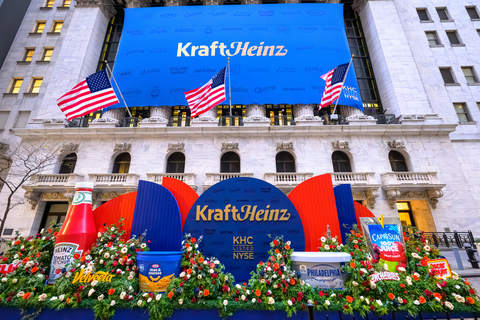
“Kraft Heinz, one of the largest food and beverage companies in the world, celebrates its listing on the NYSE and hosts its 2026 Investor Day.”
“The opportunity ahead of us is significant, and we have the brands, scale and capabilities to capture it,” said Steve Cahillane, Chief Executive Officer of Kraft Heinz. “With the right team, a business-unit-led operating model, and greater, consistent investment behind our brands, we are positioning Kraft Heinz to create long-term value for shareholders.”
Strategy to Deliver Growth
Kraft Heinz’s strategy is designed to leverage its competitive advantages, from modernizing its core in developed markets to capturing opportunities in Emerging Markets and Away From Home. The Company will execute its strategy by:
- Building superior products and brands;
- Delivering relevant and accretive innovation;
- Scaling go-to-market capabilities;
- Managing a growth-focused portfolio; and
- Unlocking efficiencies to fuel reinvestment.
Milestones Through 2029
Kraft Heinz outlined the financial milestones it expects to achieve on its path to sustainable, volume-led profitable growth:
- 2026. Build Momentum: Following investments made this year, Kraft Heinz is seeing early signs of its turnaround. The Company is narrowing market share losses, recovering its top line from 2025 levels and improving volume trends across all regions.
- 2027. Return to Growth: The Company expects to return to both top- and bottom-line growth in the second half of the year.
- 2028. Year of Growth: Kraft Heinz expects consistent top-line growth and margin expansion.
- 2029. Consistent and Accelerated Growth: By 2029, the Company expects to be operating a self-reinforcing cycle of profitable growth and to deliver double-digit total shareholder return, with a balanced contribution from earnings growth and capital returned to shareholders.
Initial 2027 Outlook
The Company will provide formal 2027 guidance on its fourth quarter earnings call. Today, management will share the initial contours of its expectations.
- Organic Net Sales1,2 is expected to be relatively flat for the full year, with a return to growth in the second half of the year.
- Adjusted Operating Income1,2 is expected to decline low single-digits versus 2026, with a return to growth in the second half of the year.
- Free Cash Flow Conversion1,2 is expected to remain at least 100%.
Further details can be found in the webcasted presentation and the supplemental materials provided for the 2026 Investor Day at https://ir.kraftheinzcompany.com/news-events/events. Interested parties can watch the live video webcast and Q&A with senior management today starting at 10:30 a.m. ET or view a replay of the event at the above link.
END NOTES
(1) Organic Net Sales, Adjusted Operating Income, and Free Cash Flow Conversion are non-GAAP financial measures. Please see discussion of non-GAAP financial measures and the reconciliations at the end of this press release for more information.
(2) Guidance for Organic Net Sales, Adjusted Operating Income, and Free Cash Flow Conversion is provided on a non-GAAP basis only because certain information necessary to calculate the most comparable GAAP measure is unavailable due to the uncertainty and inherent difficulty of predicting the occurrence and the future financial statement impact of such items impacting comparability, including, but not limited to, the impact of currency, acquisitions and divestitures, divestiture-related license income, restructuring activities, deal costs, separation costs, unrealized losses/(gains) on commodity hedges, impairment losses, certain non-ordinary course legal and regulatory matters, equity award compensation expense, nonmonetary currency devaluation, and debt prepayment and extinguishment (benefit)/costs, among other items. Therefore, as a result of the uncertainty and variability of the nature and amount of future adjustments, which could be significant, the Company is unable to provide a reconciliation of these measures without unreasonable effort.
ABOUT THE KRAFT HEINZ COMPANY
Kraft Heinz (NYSE: KHC) is one of the world’s largest food and beverage companies, with approximately $25 billion in net sales in 2025 and a portfolio of iconic brands enjoyed by consumers in more than 40 countries. By investing in our capabilities and brands, including Heinz, Kraft, Philadelphia, Primal Kitchen, and Lunchables, we are unlocking the full power of our portfolio. We deliver high-quality, great-tasting, and affordable food for the consumers of today, while shaping the future of food. Learn more at www.kraftheinzcompany.com.
Forward-Looking Statements
This press release contains a number of forward-looking statements. Words such as “accelerate,” “anticipate,” “believe,” “commit,” “continue,” “expect,” “will,” “guidance,” and “outlook,” and variations of such words and similar future or conditional expressions are intended to identify forward-looking statements. Examples of forward-looking statements include, but are not limited to, statements regarding the Company’s plans, impacts of accounting standards and guidance, growth, legal matters, taxes, costs and cost savings, impairments, dividends, expectations, investments, innovations, opportunities, capabilities, execution, initiatives, and pipeline. These forward-looking statements reflect management’s current expectations and are not guarantees of future performance and are subject to a number of risks and uncertainties, many of which are difficult to predict and beyond the Company’s control.
Important factors that may affect the Company’s business and operations and that may cause actual results to differ materially from those in the forward-looking statements include, but are not limited to, operating in a highly competitive industry; the Company’s ability to correctly predict, identify, and interpret changes in consumer preferences and demand, to offer new products to meet those changes, and to respond to competitive innovation; changes in the retail landscape or the loss of key retail customers; changes in the Company’s relationships with significant customers or suppliers, or in other business relationships; the Company’s ability to maintain, extend, and expand its reputation and brand image; the Company’s ability to effect the previously announced separation of Kraft Heinz into two independent publicly traded companies and to meet the conditions related thereto, including obtaining applicable regulatory approvals, if work related to the separation is resumed; negative effects of the announcement pendency of the separation, including the current pause on work related to the separation, on the market price of the Company’s securities and/or on the Company’s financial performance; the Company’s ability to leverage its brand value to compete against private label products; the Company’s ability to drive revenue growth in its key product categories or platforms, increase its market share, or add products that are in faster-growing and more profitable categories; product recalls or other product liability claims; climate change and legal or regulatory responses; the Company’s ability to identify, complete, or realize the benefits from strategic acquisitions, divestitures, alliances, joint ventures, or investments; the Company’s ability to successfully execute its strategic initiatives; the impacts of the Company’s international operations; the Company’s ability to protect intellectual property rights; the Company’s ability to realize the anticipated benefits from prior or future streamlining actions to reduce fixed costs, simplify or improve processes, and improve its competitiveness; the influence of the Company’s largest stockholder; the Company’s level of indebtedness, as well as our ability to comply with covenants under our debt instruments; additional impairments of the carrying amounts of goodwill or other indefinite-lived intangible assets; foreign exchange rate fluctuations; volatility in commodity, energy, and other input costs; volatility in the market value of all or a portion of the commodity derivatives we use; compliance with laws and regulations and related legal claims or regulatory enforcement actions; failure to maintain an effective system of internal controls; a downgrade in the Company’s credit rating; the impact of sales of the Company’s common stock in the public market; the impact of the Company’s share repurchases or any change in the Company’s share repurchase activity; the Company’s ability to continue to pay a regular dividend and the amounts of any such dividends; disruptions in the global economy caused by geopolitical conflicts (including the ongoing conflicts in the Middle East), unanticipated business disruptions and natural events in the locations in which the Company or the Company’s customers, suppliers, distributors, or regulators operate; economic and political conditions in the United States and in various other nations where the Company does business (including inflationary pressures, the imposition of increased or new tariffs, instability in financial institutions, general economic slowdown, recession, or a potential U.S. federal government shutdown); changes in the Company’s management team or other key personnel and the Company’s ability to hire or retain key personnel or a highly skilled and diverse global workforce; our dependence on information technology and systems, including service interruptions, misappropriation of data, or breaches of security; increased pension, labor, and people-related expenses; changes in tax laws and interpretations and the final determination of tax audits, including transfer pricing matters, and any related litigation; volatility of capital markets and other macroeconomic factors; and other factors. For additional information on these and other factors that could affect the Company’s forward-looking statements, see the Company’s risk factors, as they may be amended from time to time, set forth in its filings with the Securities and Exchange Commission (“SEC”). The Company disclaims and does not undertake any obligation to update, revise, or withdraw any forward-looking statement in this press release, except as required by applicable law or regulation.
We use our investor relations website, ir.kraftheinzcompany.com, as a routine channel for distribution of important, and often material, information about Kraft Heinz, including quarterly and annual earnings results and presentations, press releases and other announcements, webcasts, analyst presentations, investor days, sustainability initiatives, financial information, and corporate governance practices, as well as archives of past presentations and events. We encourage you to follow our investor relations website in addition to our filings with the SEC to receive timely information about the Company. The information on our website is not part of this press release and shall not be deemed to be incorporated by reference into any filings we make with the SEC.
Non-GAAP Financial Measures
The non-GAAP financial measures provided in this press release should be viewed in addition to, and not as an alternative for, results prepared in accordance with accounting principles generally accepted in the United States of America (“GAAP”).
To supplement the financial information provided, the Company has presented Organic Net Sales, Adjusted Gross Profit, Adjusted Gross Profit Margin, Adjusted Operating Income, Constant Currency Adjusted Operating Income, Adjusted EBITDA, Adjusted Net Income/(Loss), Adjusted EPS, Free Cash Flow, and Net Leverage which are considered non-GAAP financial measures. The non-GAAP financial measures presented may differ from similarly titled non-GAAP financial measures presented by other companies, and other companies may not define these non-GAAP financial measures in the same way. These measures are not substitutes for their comparable GAAP financial measures, such as net sales, net income/(loss), operating income/(loss), gross profit, diluted earnings per share (“EPS”), net cash provided by/(used for) operating activities, or other measures prescribed by GAAP, and there are limitations to using non-GAAP financial measures.
Management uses these non-GAAP financial measures to assist in comparing the Company’s performance on a consistent basis for purposes of business decision making by removing the impact of certain items that management believes do not directly reflect the Company’s underlying operations. The Company believes:
- Organic Net Sales, Adjusted Gross Profit, Adjusted Gross Profit Margin, Adjusted Operating Income, Constant Currency Adjusted Operating Income, Adjusted EBITDA, Adjusted Net Income/(Loss), and Adjusted EPS provide important comparability of underlying operating results, allowing investors and management to assess the Company’s operating performance on a consistent basis; and
- Free Cash Flow and Net Leverage provide measures of the Company’s core operating performance, the cash-generating capabilities of the Company’s business operations, and are factors used in determining the Company’s borrowing capacity and the amount of cash available for debt repayments, dividends, acquisitions, share repurchases, and other corporate purposes.
Management believes that presenting the Company’s non-GAAP financial measures is useful to investors because it (i) provides investors with meaningful supplemental information regarding financial performance by excluding certain items, (ii) permits investors to view performance using the same tools that management uses to budget, make operating and strategic decisions, and evaluate historical performance, and (iii) otherwise provides supplemental information that may be useful to investors in evaluating the Company’s results. The Company believes that the presentation of these non-GAAP financial measures, when considered together with the corresponding GAAP financial measures and the reconciliations to those measures, provides investors with additional understanding of the factors and trends affecting the Company’s business than could be obtained absent these disclosures.
Definitions
Organic Net Sales is defined as net sales excluding, when they occur, the impact of currency, acquisitions and divestitures, and a 53rd week of shipments. The Company calculates the impact of currency on net sales by holding exchange rates constant at the previous year’s exchange rate, with the exception of highly inflationary subsidiaries, for which the Company calculates the previous year’s results using the current year’s exchange rate.
Adjusted Operating Income is defined as operating income/(loss) excluding, when they occur, the impacts of restructuring activities, deal costs, separation costs, unrealized gains/(losses) on commodity hedges (the unrealized gains and losses are recorded in general corporate expenses until realized; once realized, the gains and losses are recorded in the applicable segment’s operating results), impairment losses, and certain non-ordinary course legal and regulatory matters. The Company also presents Adjusted Operating Income on a constant currency basis (Constant Currency Adjusted Operating Income). The Company calculates the impact of currency on Adjusted Operating Income by holding exchange rates constant at the previous year’s exchange rate, with the exception of highly inflationary subsidiaries, for which it calculates the previous year’s results using the current year’s exchange rate.
Adjusted Gross Profit, Adjusted Net Income/(Loss), and Adjusted EPS are defined as gross profit, net income/(loss), and diluted earnings per share, respectively, excluding, when they occur, the impacts of restructuring activities, deal costs, separation costs, unrealized losses/(gains) on commodity hedges, impairment losses, certain non-ordinary course legal and regulatory matters, losses/(gains) on the sale of a business, other losses/(gains) related to acquisitions and divestitures (e.g., tax and hedging impacts), nonmonetary currency devaluation (e.g., remeasurement gains and losses), debt prepayment and extinguishment (benefit)/costs, and certain significant discrete income tax items (e.g., U.S. and non-U.S. tax reform), and including when they occur, adjustments to reflect preferred stock dividend payments on an accrual basis. Adjusted Gross Profit Margin is defined as Adjusted Gross Profit divided by net sales.
Net Leverage is defined as debt less cash, cash equivalents and short-term investments divided by Adjusted EBITDA. Adjusted EBITDA is defined as net income/(loss) from continuing operations before interest expense, other expense/(income), provision for/(benefit from) income taxes, and depreciation and amortization (excluding restructuring activities); in addition to these adjustments, the Company excludes, when they occur, the impacts of divestiture-related license income, restructuring activities, deal costs, separation costs, unrealized losses/(gains) on commodity hedges, impairment losses, certain non-ordinary course legal and regulatory matters, and equity award compensation expense (excluding restructuring activities).
Free Cash Flow is defined as net cash provided by/(used for) operating activities less capital expenditures. The use of this non-GAAP measure does not imply or represent the residual cash flow for discretionary expenditures since the Company has certain non-discretionary obligations such as debt service that are not deducted from the measure.
View source version on businesswire.com: https://www.businesswire.com/news/home/20261112610595/en/
Media gallery



